As we look back on the gaming landscape of the 2010s and into the mid-2020s, few titles have maintained their cultural relevance and player affection quite like Stardew Valley. Released in 2016 alongside giants like Overwatch and Dark Souls 3, this humble farming simulator from solo developer ConcernedApe (Eric Barone) didn't just carve out a niche; it cultivated an entire genre and community. Now, in 2026, its influence is more palpable than ever. While many games from that era are remembered fondly, Stardew Valley occupies a unique space—a title that feels timeless, endlessly replayable, and, to many, perfect in its execution.
The Anatomy of a "Perfect" Video Game
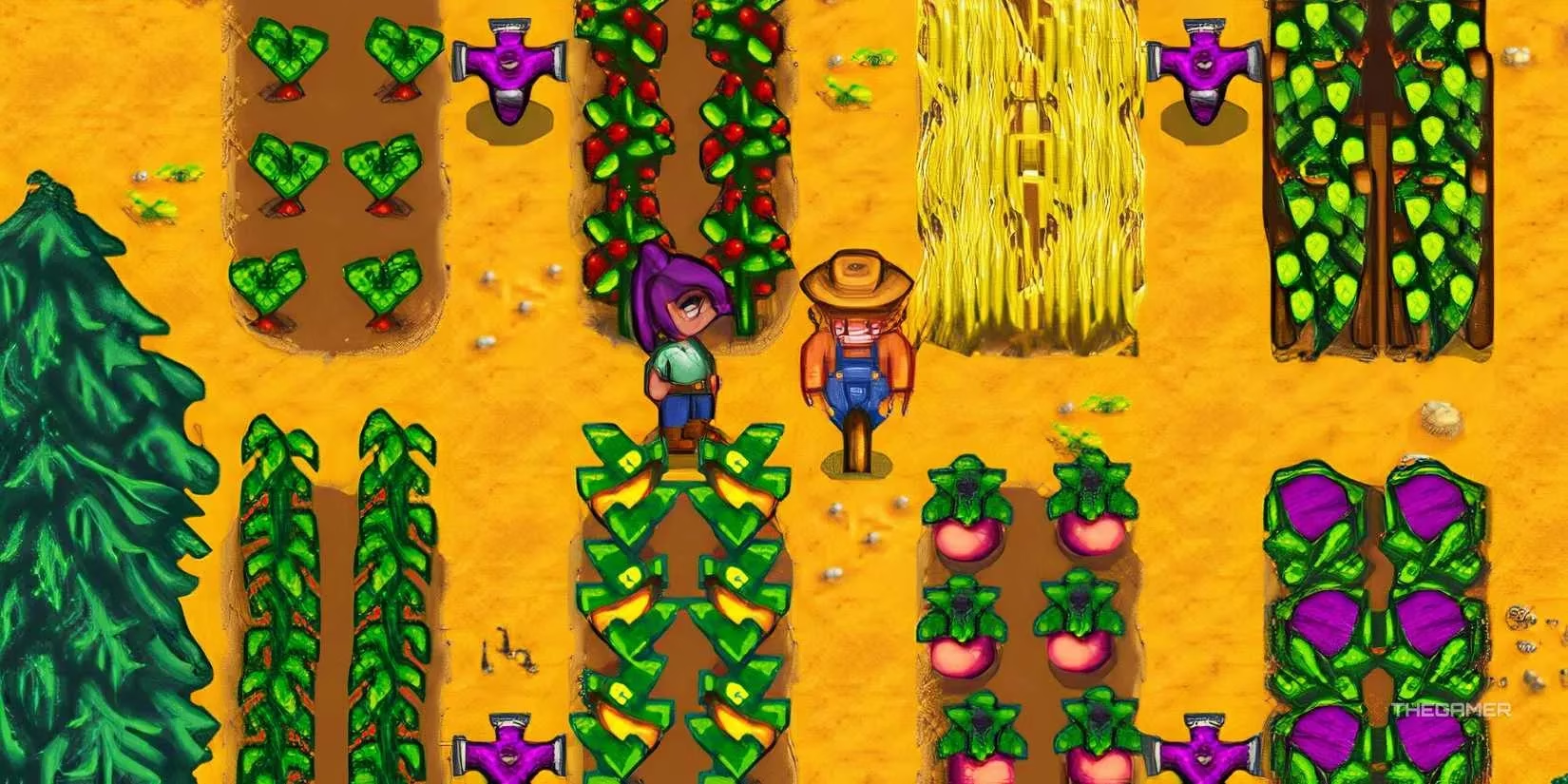
The debate over what constitutes a "perfect" game is eternal. Candidates range from the elegant simplicity of Tetris to the sprawling ambition of Skyrim. Yet, Stardew Valley makes a compelling case not through sheer scale or graphical prowess, but through masterful design and emotional resonance. It doesn't boast the biggest open world or the most cinematic narrative. Instead, it excels at being a video game in the purest sense. Its core appeal lies in a deceptively simple yet infinitely engaging loop:
-
Player Agency & Freedom: Every day in Pelican Town is yours to shape. You can focus on farming, mining in the caverns, fishing by the river, foraging in the forest, or building relationships with the town's memorable residents. There is no "wrong" way to play.
-
Accessible Depth: The game is easy to pick up but offers layers of strategic complexity for those who seek it. From optimizing crop layouts for maximum profit to meticulously planning community center bundles, the depth is always optional, never forced.
-
Cohesive Aesthetic: The pixel art is charming, warm, and full of personality. The soundtrack, also composed by Barone, is iconic, perfectly capturing the mood of each season and location.
This formula created a uniquely comforting experience. In a world that often feels chaotic, Stardew Valley offered a sanctuary—a digital homestead where effort was rewarded, community mattered, and progress felt tangible.
The Ripple Effect: Birthing a Genre
Stardew Valley's impact cannot be overstated. While it was openly inspired by the Harvest Moon/Story of Seasons series, it refined and popularized the "cozy life sim" genre for a modern audience. Its explosive success demonstrated a massive, underserved market for games focused on relaxation, creativity, and low-stakes progression. This directly paved the way for a new wave of indie hits in the 2020s. 😊
The game's legacy is evident in two key areas:
-
Commercial & Critical Success: As a one-person project, its sales exceeding tens of millions of copies worldwide is a monumental achievement. It received universal critical acclaim and has been ported to virtually every gaming platform.
-
Cultural Staying Power: A decade after its launch, it remains a fixture on streaming platforms, has a vibrant modding community, and continues to receive substantial free content updates from ConcernedApe, fostering incredible player loyalty.
Looking Forward: Haunted Chocolatier and Beyond
The shadow—or rather, the warm sunlight—of Stardew Valley looms large over its creator's next project. Announced several years ago, Haunted Chocolatier is one of the most anticipated indie games on the horizon.
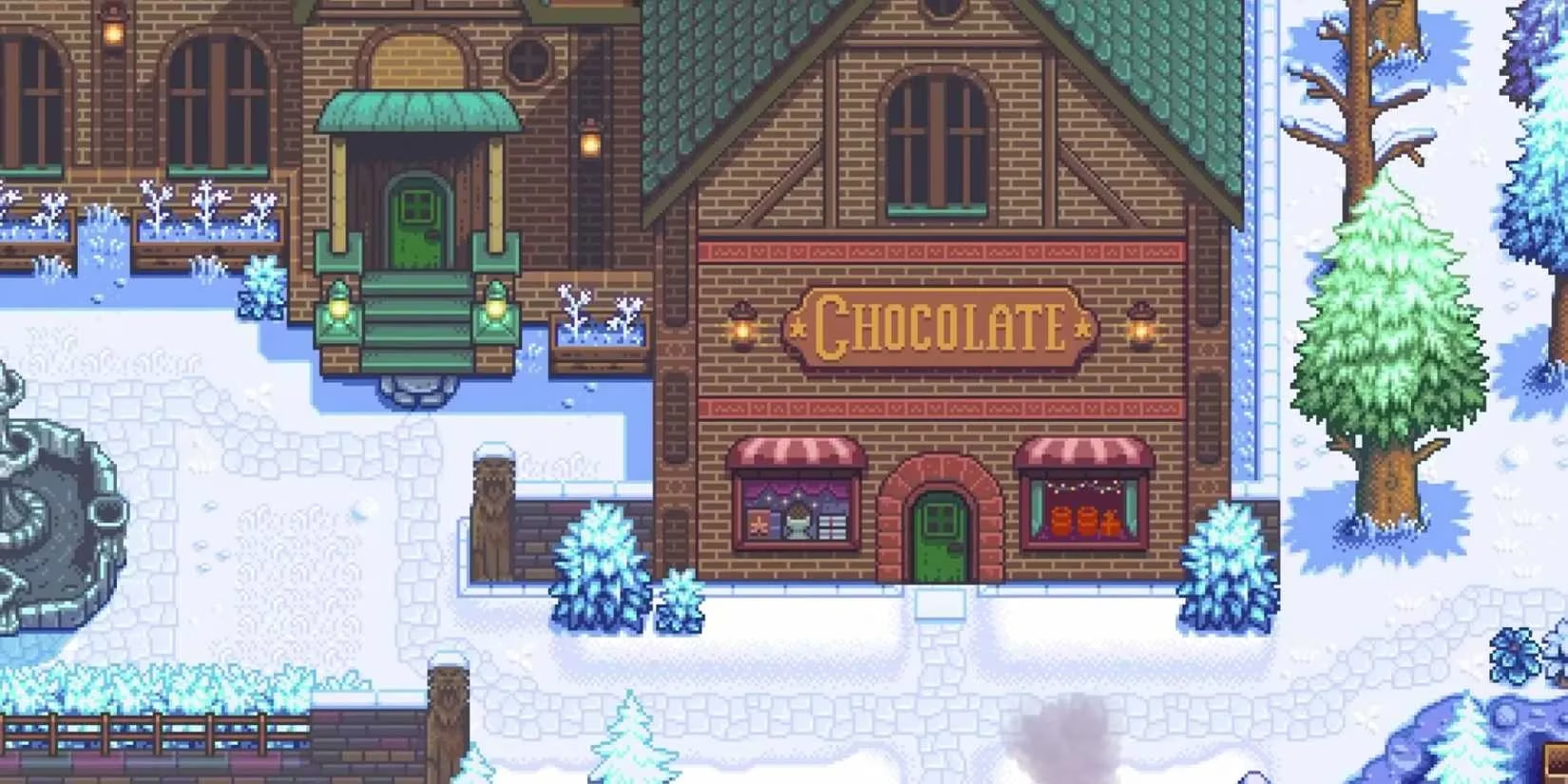
However, there is a growing consensus that Haunted Chocolatier does not need to be "perfect," nor will it likely replicate the phenomenon of its predecessor. This is not a criticism but a recognition of reality. Stardew Valley's status was born from a unique alchemy of passion, timing, and cultural reception. Expecting a repeat would be unfair. Haunted Chocolatier appears to be a different beast—trading pastoral farming for gothic confectionery and ghostly assistants. It can be an excellent game on its own terms without replacing Stardew Valley in players' hearts.
This sentiment extends to other spiritual successors like Witchbrook. The market is now rich with cozy life sims, but Stardew Valley's position as the genre-defining pioneer remains unshaken. It's the benchmark against which others are measured.
Why Perfection Endures
So, what makes Stardew Valley feel "perfect" even in 2026?
| Quality | Explanation |
|---|---|
| Freedom & Lack of Pressure | The game respects your time and choices. There are no game overs, only changing seasons. |
| Meaningful Progression | Every action, from planting a seed to giving a gift, contributes to a tangible sense of growth. |
| Heart & Authenticity | The game is infused with the genuine passion of its creator, free from predatory monetization. |
| Infinite Replayability | Different farm maps, romance options, and personal goals make each save file a unique story. |
Ultimately, Stardew Valley's perfection is subjective yet widely shared. It is a game about finding meaning in simple routines, building connections, and creating something of your own. In an industry often chasing hyper-realistic graphics and live-service trends, Stardew Valley stands as a testament to the enduring power of thoughtful design, artistic vision, and heartfelt storytelling. It is less a product of its time and more a timeless piece of interactive comfort. As we move further into the future of gaming, its gentle, persistent bell will continue to chime at the start of each new day, inviting players old and new to return to the valley once more.