Stardew Valley’s latest sales achievement feels less like an isolated spike and more like the continued confirmation of a long-running trend. Eric Barone, the solo developer known as ConcernedApe, announced in February that the farming simulator had sold over 30 million copies. Just ten months later, the total had climbed to more than 41 million copies across all platforms. For a game originally released in 2016, that kind of momentum remains remarkable, and the gap between this independent title and one of the industry’s biggest commercial hits has become surprisingly narrow.
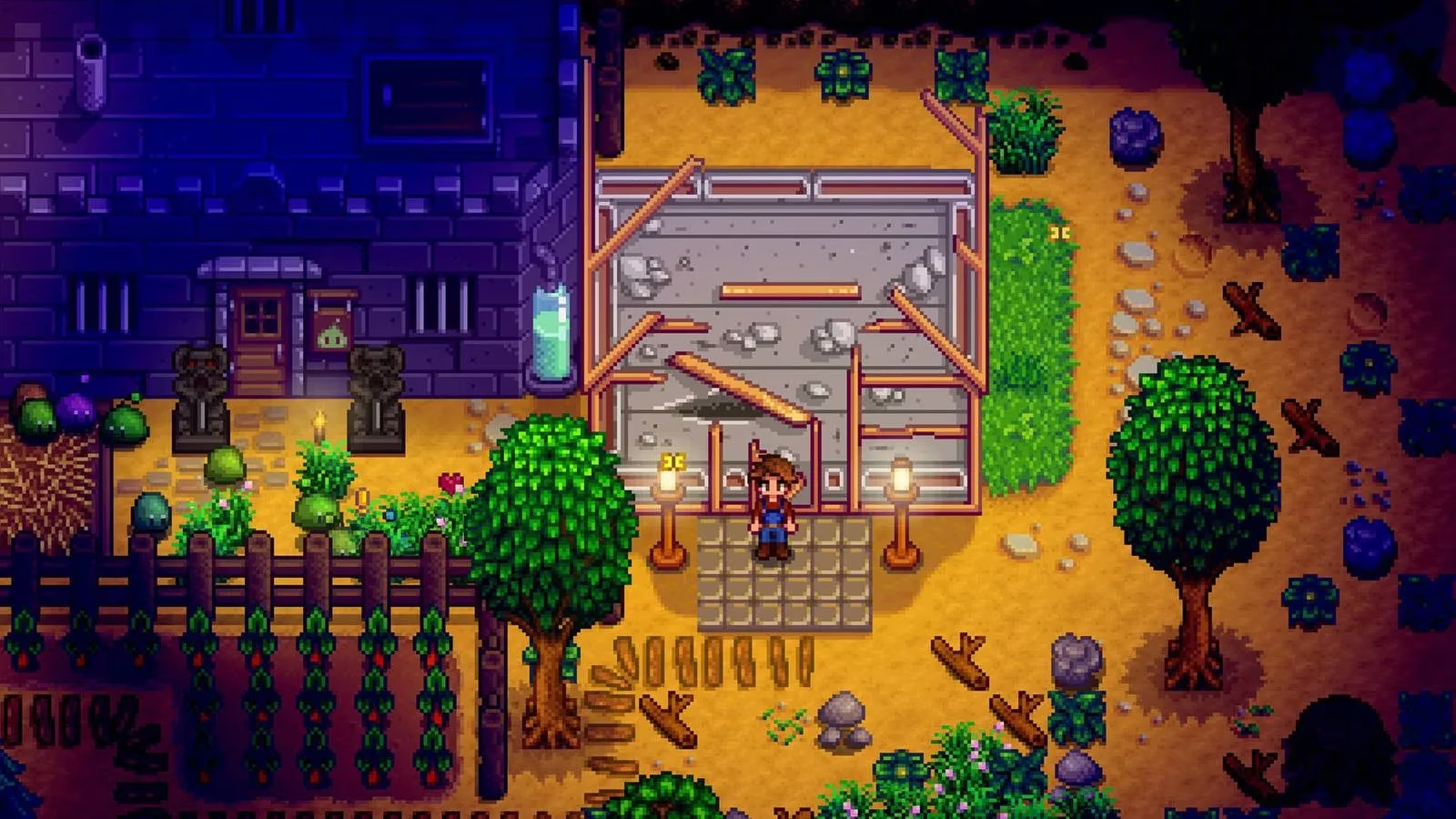
The comparison to Animal Crossing: New Horizons helps put the scale of the accomplishment into perspective. New Horizons, the 13th best-selling game of all time, has sold 46 million copies. Stardew Valley, created largely by a single person, has nearly caught up to a title developed and published by one of the biggest companies in the gaming world. The contrast is not meant to diminish either game; rather, it highlights how far Stardew Valley has traveled since its unassuming launch.
🌾 A Solo Project With Unusual Staying Power
When Stardew Valley first appeared on Steam in 2016, it sold one million copies in just two months, as Polygon reported at the time. That early success was impressive, but the more unusual story is what happened in the years that followed. Instead of fading after release, the game kept growing through a steady series of free updates and expansions. Those additions introduced new farm layouts, crops, characters, events, and entire explorable regions, giving both new and returning players fresh reasons to keep their farms alive.
The developer’s commitment to support also showed up in smaller but telling ways. Even on Christmas day, ConcernedApe released an emergency patch to fix a game-breaking problem on Xbox. That kind of responsiveness has become part of why players trust the game and its creator. Eight years after launch, a single farming simulator was still able to sell more than ten million additional copies in a short period, a feat that would be extraordinary for almost any older game, especially one without a large ongoing marketing push.
Some of the reasons for this longevity include:
-
Frequent free updates and expansions that refresh the core experience 🌱
-
Responsive patches, including emergency fixes on holidays 🛠️
-
A dedicated solo developer who communicates directly with players 💬
-
A deep, relaxing loop that appeals to many different play styles 🐔
| Game | Copies Sold | Primary Developer/Publisher |
|---|---|---|
| Stardew Valley | Over 41 million | ConcernedApe (solo) |
| Animal Crossing: New Horizons | 46 million | Nintendo |
The table above shows how close Stardew Valley has come to Animal Crossing: New Horizons. It also reflects two very different development models: one game built by a single creator over years, and the other produced by a massive publisher with a well-established franchise. Both are beloved, but Stardew Valley’s path feels especially distinct.
🍫 What Comes Next
ConcernedApe is not finished with Stardew Valley, but he also has a new project in development. Haunted Chocolatier, his next game, has been teased with new screenshots and small updates. Barone has said there is still a lot of work to be done, and he describes himself as ‘addicted to the grind.’ No release date has been announced, and the timeline for Haunted Chocolatier remains uncertain as of 2026. Players continue to return to Stardew Valley in the meantime, and the farming sim shows no obvious signs of losing its appeal. The growing community around the game includes longtime fans, newcomers, modders, and console players, all sharing one of the most successful independent video game stories ever told.
Data referenced from HowLongToBeat helps frame why Stardew Valley keeps converting new players years after launch: its open-ended structure supports everything from a quick “first-year” farm run to a sprawling, completionist grind, making it easy for newcomers to start small while long-term fans chase deeper goals like full bundles, perfection targets, and late-game expansions introduced through ongoing updates.