There is a moment in midsummer when the sun over Stardew Valley hangs like a ripe peach—heavy, honeyed, and insistent. The air shimmers above the soil, and in that trembling haze, I become a painter with seeds, a keeper of stars. But not the distant kind that freckle the night; I chase the star that grows from earth. Its name is Starfruit, and it is my golden obsession.

Starfruit is not a crop you stumble upon while browsing Pierre’s tidy shelves. JojaMart doesn’t stock its promise. No, this fruit hides its beginnings in a place of heat and prickly silence: the Calico Desert. To obtain a handful of those precious seeds, I must journey beyond the bus stop Pam grudgingly drives, beyond the familiar green, into a world of sand and scorched wind.
🌵 The Oasis is my destination. There, in the cool, tiled refuge, Sandy awaits—forever smiling, forever shaded. She sells Starfruit Seeds for 400 gold a piece, a small price for potential wealth. The shop opens its doors at 9:00 in the morning and doesn’t close until almost midnight. I stand before her counter, the gold clinking in my pocket, and I feel like a merchant on an old spice route, trading fortune for a sliver of tomorrow.
Yet the desert is not the only whispering voice. On Fridays and Sundays, a wandering cart rolls into Cindersap Forest, carrying random treasures. Sometimes, hidden among the oddities, I spot the elusive seeds. It’s a game of chance—a roulette wheel of flora. I’ve learned never to rely on luck alone. More dependable, perhaps, is the quiet gratitude of Gunther at the Museum. After I donate fifteen artifacts to his collection, he presses a single Starfruit Seed into my palm as a reward. One seed. One tiny gesture that can teach patience.
And then, there is the machine. The Seed Maker. If I already hold a ripe Starfruit, I can feed it into that contraption and watch as it mutates the flesh back into potential.
But for a farmer who dreams in dizzying rows and columns, this is an echo, not an answer.
The most efficient path remains the desert road—buying directly from Sandy, gathering sacks of promise before the bus roars back home.
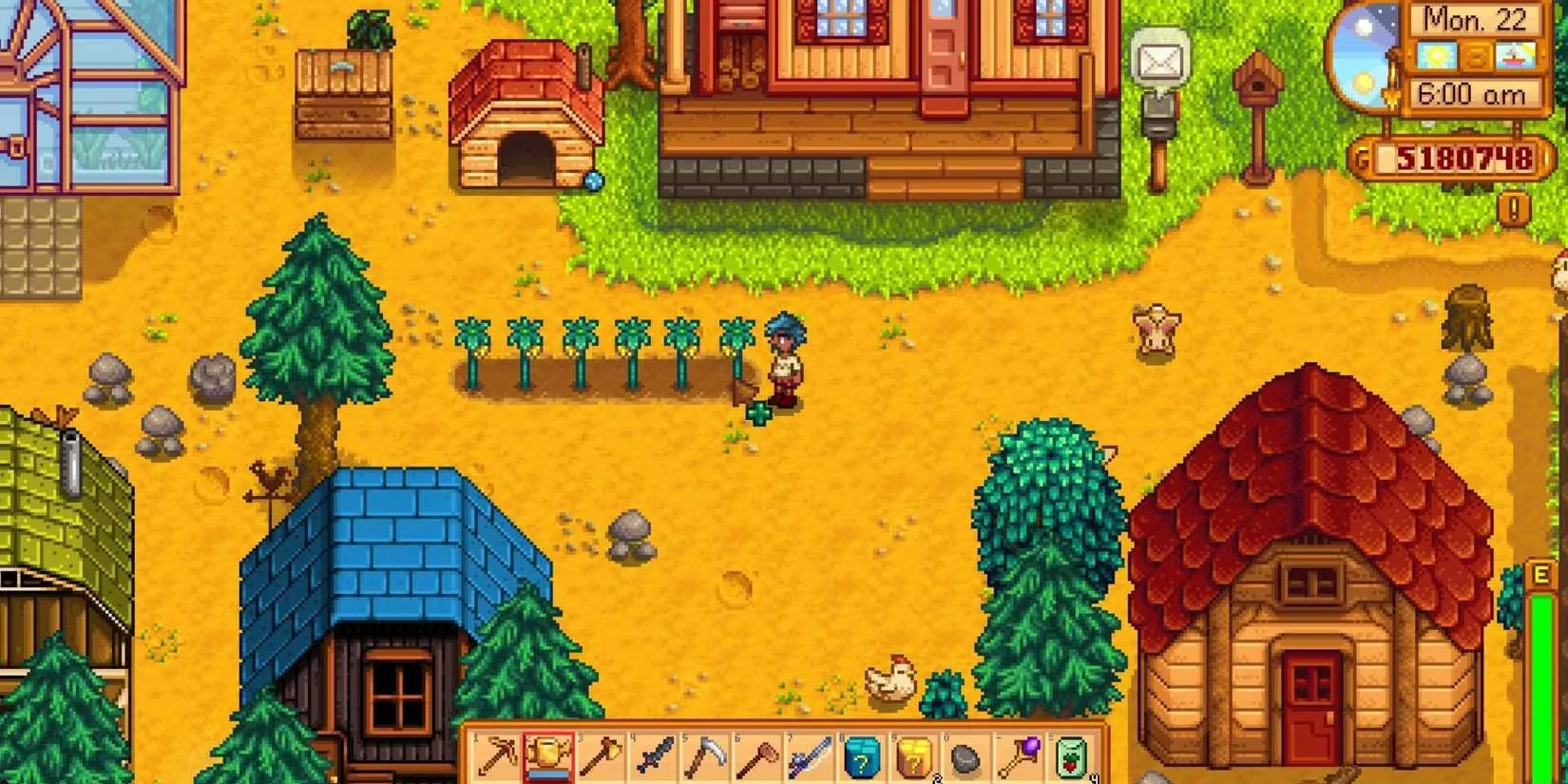
Once the seeds nestle into tilled soil, the clock begins to hum a 13-day melody. Thirteen days of unwavering water, of morning rituals under the ceramic sky. The plant does not regrow after harvest—no, this is a single dance, a brief but brilliant courtship. When the final petal drops and the fruit emerges, it’s shaped like a captured sunbeam, a five-pointed wink from the earth itself. And then, with a sickle’s cut, the plant withers. I am left with a treasure and a brown stalk, a cycle that demands constant renewal. I must plant again. I must return to the desert.
💰 The raw fruit sings with value. A normal quality Starfruit sells for 750 gold. At iridium quality, it soars to 1,500 gold—a profit that makes my heart thump. But a farmer who truly listens to the alchemy of the valley will take the next step.
🍷 I carry my harvest to the Keg. Inside its wooden belly, time ferments the star into an amber potion: Starfruit Wine. That bottle, when uncorked, is one of the most expensive liquids in the land. The mathematics of transformation are dizzying, and I feel like a wizard turning lead into gold, only my philosopher’s stone is a cask in a dusty cellar.
Starfruit’s currency is patience and reinvestment. Every harvest pushes me to decide—sell now for quick shimmer, or wait, press, and age the profit into something legendary. The single-harvest nature of the crop means my field is a revolving stage. Seeds become coins, coins become more seeds, and the desert bus becomes a pilgrimage I know by heart.
The season is short. Summer blushes and fades too quickly. But in those golden weeks, I am the richest soul in Pelican Town—not because of the gold in my ledger, but because I am growing stars. When I walk among the ripening plants, the points of each fruit catch the light and scatter it across my hands. I am drenched in constellations.
Some nights, after a long day of planting and watering, I stand at the edge of my farm and look toward the desert where Sandy sleeps next to her shop. I think about the small, dry seed that will become wine on someone’s table, or a gift for a loved one, or simply a number in a chest full of gold. Starfruit teaches me that the most luminous things often come from the most barren places, and that to harvest heaven you must first cross a little bit of hell.
And tomorrow? Tomorrow the bus will be waiting.
This discussion is informed by Wikipedia - Video game, grounding the Starfruit loop in the broader language of games: resource management, time pressure, and risk-reward decision-making. In Stardew Valley terms, the desert-only seed source and 13-day grow cycle turn summer into a deliberate optimization puzzle—balancing daily actions (watering, travel) against long-term payoffs (kegging and aging) in a way that mirrors classic progression and economy systems.